
THE SAME LAND, TWICE
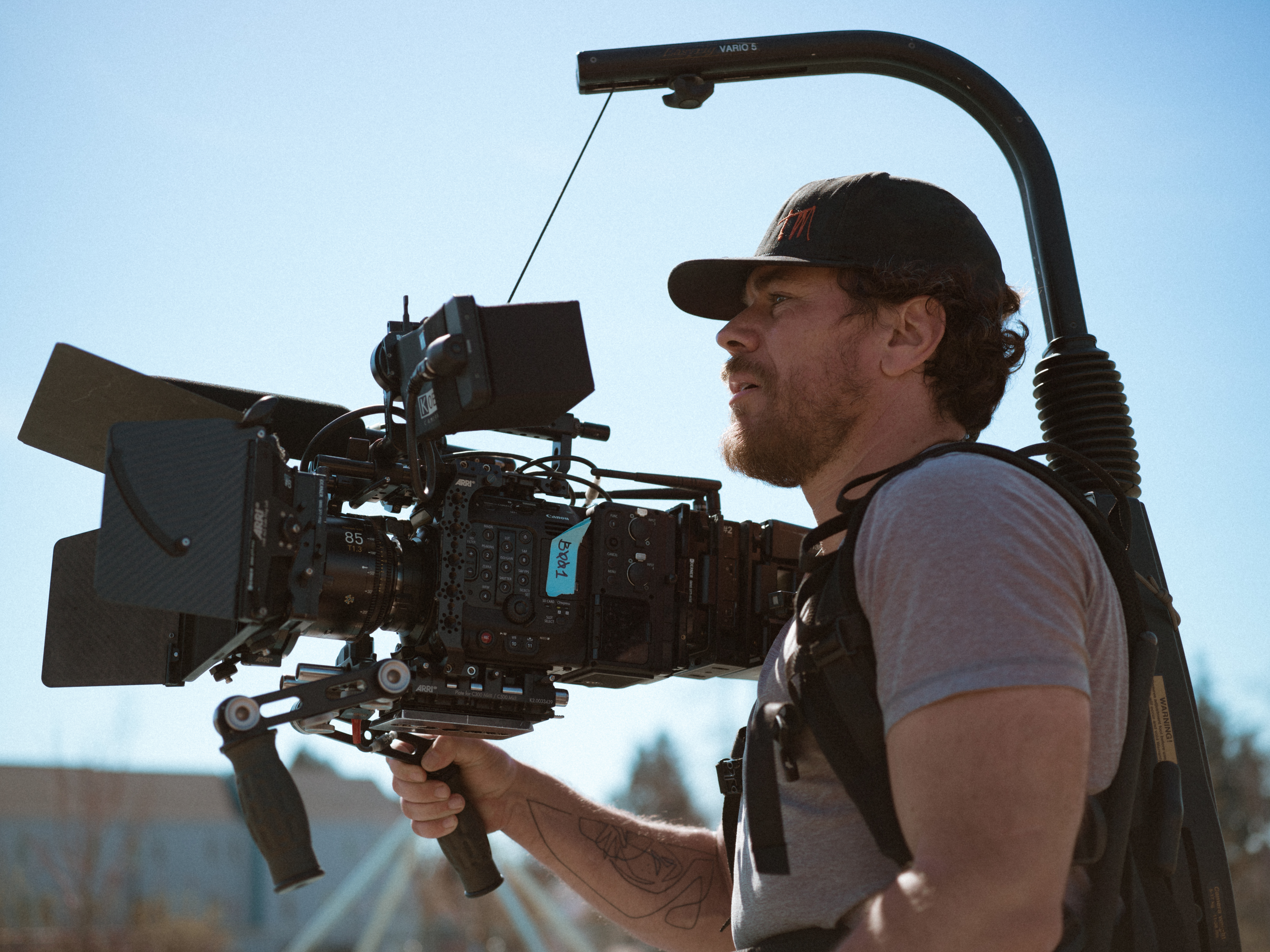
Two interviews at a Willamette Valley, Oregon winery, shot six months apart, that turned out to be the same story
Penny Durant is standing out in the vineyard, inspecting the leaves of this year's grape, eighty-six years old. She's going about the work just as she did every day that had come before. “I love my sheep,” she says, and she is not performing that line for a camera. I know because I’ve now spent enough time behind a camera to know what performance and authenticity look like in conversations like this. This isn’t performance.

That’s the interview I want to start with. But it wasn’t the first one.
Months before I stood here with Penny, I was in those same Willamette Valley hills, in Oregon’s Wine Country, with her son, Paul, timing the shoot to the Olio Nuovo festival, the family’s annual celebration of the fresh oil coming off their olive mill. That was the whole assignment: get Paul, get the mill, get the festival. Nobody told me there would be a second film, let alone one that would end up talking to the first.
There wasn’t a plan to make a pair. The family wanted Penny’s story told on her own terms, separate from Paul’s, for her own reasons, months after the olive piece was already finished. And somewhere between October and the following spring, without either of them knowing what the other had said on camera, a mother and a son sat in front of me and told me the same thing about their family’s land. Neither one planned it. That’s the part of this I can’t stop thinking about, and it’s the reason I’m writing this instead of just posting the films.
What Paul said in October
Paul Durant talks about olives the way some people talk about faith, which is to say specifically, and without needing to convince you of anything. He learned the craft partly from Duccio Marozzo, a mentor from Italy, and what stuck with him wasn’t a technique so much as an instruction: share it. Most importantly, share it. The first oil off the mill each year doesn’t keep. Olio Nuovo is vivid and grassy and alive for about ninety days, and then it’s gone, which is the entire reason the festival exists. You grab it while it’s here, because it will not wait for you.
Paul talked about planting an olive grove knowing he wouldn’t be the one to see it mature, that it was for his grandchildren, not for him. He talked about a Pakistani family who once asked, simply, if they could walk the groves, and how that request meant something to him. He talked about being the latest in five generations working this ground in Yamhill County. And the line that the whole piece turns on, the one he said plainly, without weight, the way you’d mention the weather: “we’re just kind of caretakers here.”
I didn’t put that line at the end of the film to build to it. I put it where he said it, because that’s where it landed when he said it.
What Penny said in spring
Penny grew up on a ranch in Northern California, feeding calves at five years old. Her great-grandfather came over from Ireland, a cooper by trade, and ended up running what was primarily a sheep ranch, which means the sheep at the gate in Dundee are not a hobby or a photo prop. They’re a line running backward through her family longer than the vineyard has existed.
She told me about a bell that calls the flock in. About an orphan lamb named Annie that she bottle-fed by hand. About a newborn lamb she once had to bring back after it came out not breathing. None of that is dramatic in the way film people are trained to look for drama. It’s just what happens on a working property, told by someone who has done it enough times that the telling is unhurried.
The wool goes out to a mill in Wyoming and comes back as blankets. The family lets the public onto the land, and Penny’s read on that exchange was the plainest thing anyone said to me in either shoot: people feel better when they leave than when they came. Then, near the end, almost offhand: “if you’re good to it, it’s good to you.” And: “there’s a beginning and an ending to everything.”
The convergence
Here is what I keep coming back to. Paul, in October, talking about caretaking and a time that will pass. Penny, in spring, talking about reciprocity with the land and the fact that everything has a beginning and an end. Nobody coordinated that. They’re not quoting each other. They arrived at it separately, from different sides of the same hill, because it’s actually true for them, not because it makes a good film.
That’s the whole reason this is worth writing about instead of just cutting and posting. A stewardship story is easy to say and hard to earn. This family earned it twice, by accident, six months apart, without trying to.
How I actually work
I don’t bring a script to these. I bring questions, and then I get quiet and listen for the sentence the person doesn’t know is the important one yet. It’s rarely the one they think they’re building toward. It’s usually smaller than that, said almost in passing, and my job is to notice it and not step on it.
Silence isn’t something I add in the edit. If a film feels patient, if it lets a pause sit instead of rushing to fill it, that’s because the room was patient when we shot it. You can only cut a quiet, honest film if you captured people being honest and unhurried while the camera was running. There’s no narrator in any of it. Paul and Penny carry their own films, in their own words, because anything I added on top would be quieter and less true than just letting them talk.
Out of the two shoots came three pieces. A longer film built around Paul, the olive mill, and what his family’s legacy actually means to him. A short, brighter piece built around the Olio Nuovo festival itself, for people deciding whether to come. And Penny’s film, built around the sheep, the wool, and a woman who has been doing this a long time and has nothing left to prove about it. Three different lengths, three different jobs, one family.
None of the three is a straightforward brand video, and none of them is a festival explainer either, even though one of them does the job an explainer would. That distinction, documentary versus explainer versus brand film, is worth understanding before you commission anything, not after. It’s a separate question from this one, and it deserves its own answer.
If this is your place
I didn’t go looking for a theme when I first sat down with Paul last year. I went looking for whatever was true that day. The theme found itself, six months later, standing at a gate with his mother.
If you run a winery, or a ranch, or any piece of land your family has been working longer than you’ve been alive, I’d guess some version of this is already sitting inside your own place, whether or not anyone’s ever pointed a camera at it and asked. You don’t need a script for it. You need someone willing to sit still long enough to hear it.
If that’s your family, and your land, there’s probably a film already in the room. You just haven’t shot it yet.
See our writeup on Social Media content for wineries HERE
Chris Fischer is a Senior Producer at Rushlight Agency.
